EU's new contaminant regulation (2023/915) to take effect from May 25, 2023, replacing (EC) 1881/2006, promises improved clarity and structured content
 SGS FoodNexus Editorial Team
Published
Updated
2 min read

On May 5th, the new contaminant regulation (EU) 2023/915 was published. This will come into force as early as May 25th, 2023 and will replace the previous regulation (EC) 1881/2006.
This new regulation was planned for a long time and should present the contents more clearly through a new structure and integration of the many footnotes.
Key changes
The definitions of key terms such as "food", "food business operator", and others have been established in Article 1.
In addition, a basic detoxification ban has been introduced for all foods containing contaminants listed in Annex I - chemical treatments may not be used to intentionally remove these harmful substances from the product. In Regulation (EC) 1881/2006, the restriction was applied only to mycotoxins.
In regards to maximum limits for certain contaminants present within specific foods, transitional measures are now put into place with Art.10 outlining their placement onto markets accordingly.
Furthermore, melamine contamination levels have also received attention under new European standards following the publication by the Codex Alimentarius regarding liquid infant formulae's acceptable limit amounts.
The limits for some contaminants have also been adjusted or added. In Annex I you will find new limits for Mycotoxins (Aflatoxins, Ochratoxin A, Patulin, Deoxynivalenol, Zearalenone, Fumonisins, Citrinin, Ergot sclerotia and ergot alkaloids), Plant toxins (Erucic acid, including erucic acid bound in fat, Tropane alkaloids, Hydrocyanic acid, including hydrocyanic acid bound in cyanogenic glycosides, Pyrrolizidine alkaloids, Opium alkaloids, Delta-9-tetrahydrocannabinol (Δ9-THC) equivalents), Metals and other elements (Lead, Cadmium, Mercury, Arsenic, Tin (inorganic)), Halogenated persistent organic pollutants (Dioxins and PCBs, Perfluoroalkyl substances), Processing contaminants (Polycyclic aromatic hydrocarbon (PAHs), 3-monochloropropane-1,2-diol (3-MCPD), Sum of 3-monochloropropanediol (3-MCPD) and 3-MCPD fatty acid esters, expressed as 3-MCPD, Glycidyl fatty acid esters, expressed as glycidol), other Contaminants (Nitrates, Melamine, Perchlorate).
For the sum of aflatoxins, maximum levels refer to lower bound concentrations, which are calculated on the assumption that all the values below the limit of quantification are zero.
Follow the changes easily with SGS FOODNEXUS
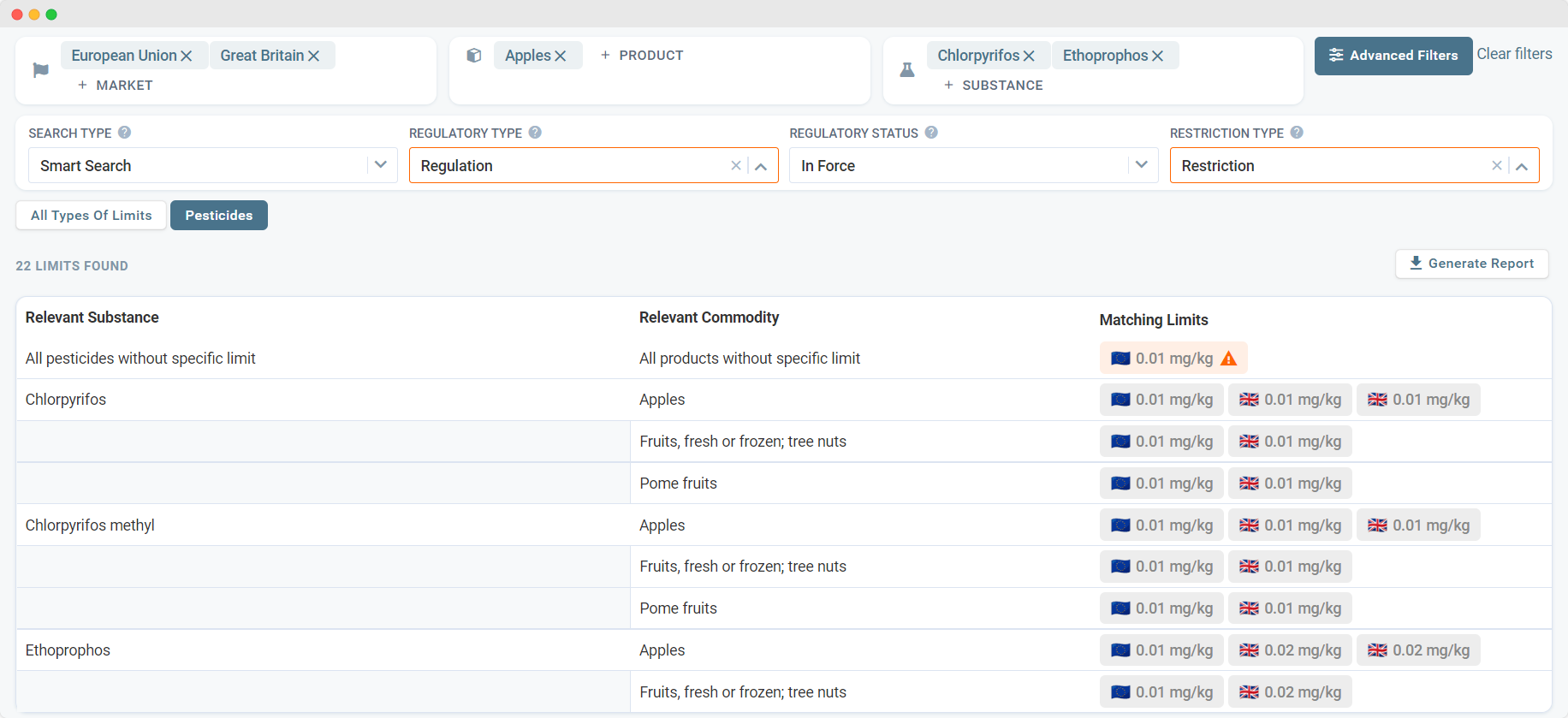
To keep track of all changes, we recommend SGS FoodNexus, an AI-driven solution that simplifies the process and keeps you informed of all regulatory updates. This tool provides quick access to thousands of relevant documents with targeted risk analysis and comprehensive insights.
Thanks to the SGS FOODNEXUS Smart Test Protocol, we've enhanced and updated the previous article. Check out the latest version for the most recent insights!