Webinar deckFood fraud
Food Fraud & Adulteration: 2026 Trends & Forecasts
Where food fraud is concentrated, which trends are accelerating, and where pressure may move next.
Watch


Industry reportH1 2026
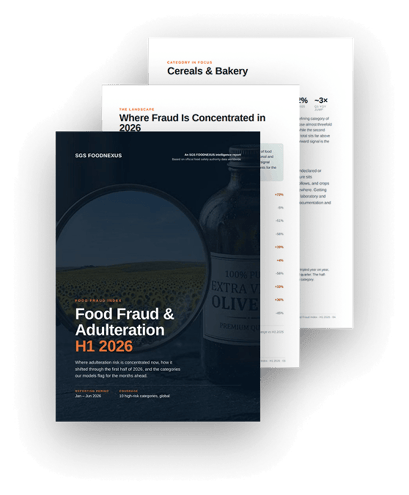
Where fraud risk is concentrated now, how it shifted through the first half of 2026, and the categories our models flag for the months ahead.
Food fraud is economically motivated and built to avoid detection until it surfaces as a recall, a failed audit or reputational damage. The hardest part is not reacting to it: it is seeing where it is building before it reaches your supply chain. The picture changes fast, and the categories most exposed this year are rarely the ones that led last year.
The FoodNexus Food Fraud Index turns fragmented incident data into a structured picture of adulteration risk across global markets. For the first half of 2026 it ranks the highest-risk categories by reported incident volume, shows which are rising fastest and why, flags the reversals where last year's leading categories cooled, and gives a six-month forward risk signal for every category. The analysis draws on official national and international food safety authority data.
Food safety, quality assurance and regulatory affairs leaders at global food manufacturers, retailers and brands, and the procurement and supplier risk professionals who work alongside them. It is most relevant for teams deciding where testing and audit effort should go.
Food fraud intelligence
The index is compiled by the FoodNexus data and research team from official food safety authority data across global markets, and reviewed by our food fraud specialists.
Webinar deckFood fraud
Where food fraud is concentrated, which trends are accelerating, and where pressure may move next.
Watch
Webinar recordingSupplier management
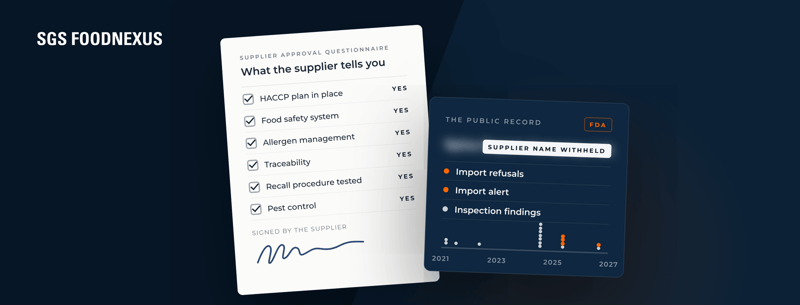
Check a supplier against public records in about 15 minutes, using four questions on a real example.
Under 8 minWatch now
Webinar recordingFood safety and quality
How food manufacturers turn alerts, recalls and import refusals into preventive decisions, with workflows teams can adopt quickly.
25 minWatch now